9 min read
Web Design for Interior Designers: How to Showcase Projects and Win More Enquiries
A practical guide to web design for interior designers in Singapore, showing how custom layouts and restrained scroll animation present finished homes better than a template.
David
Content Specialist
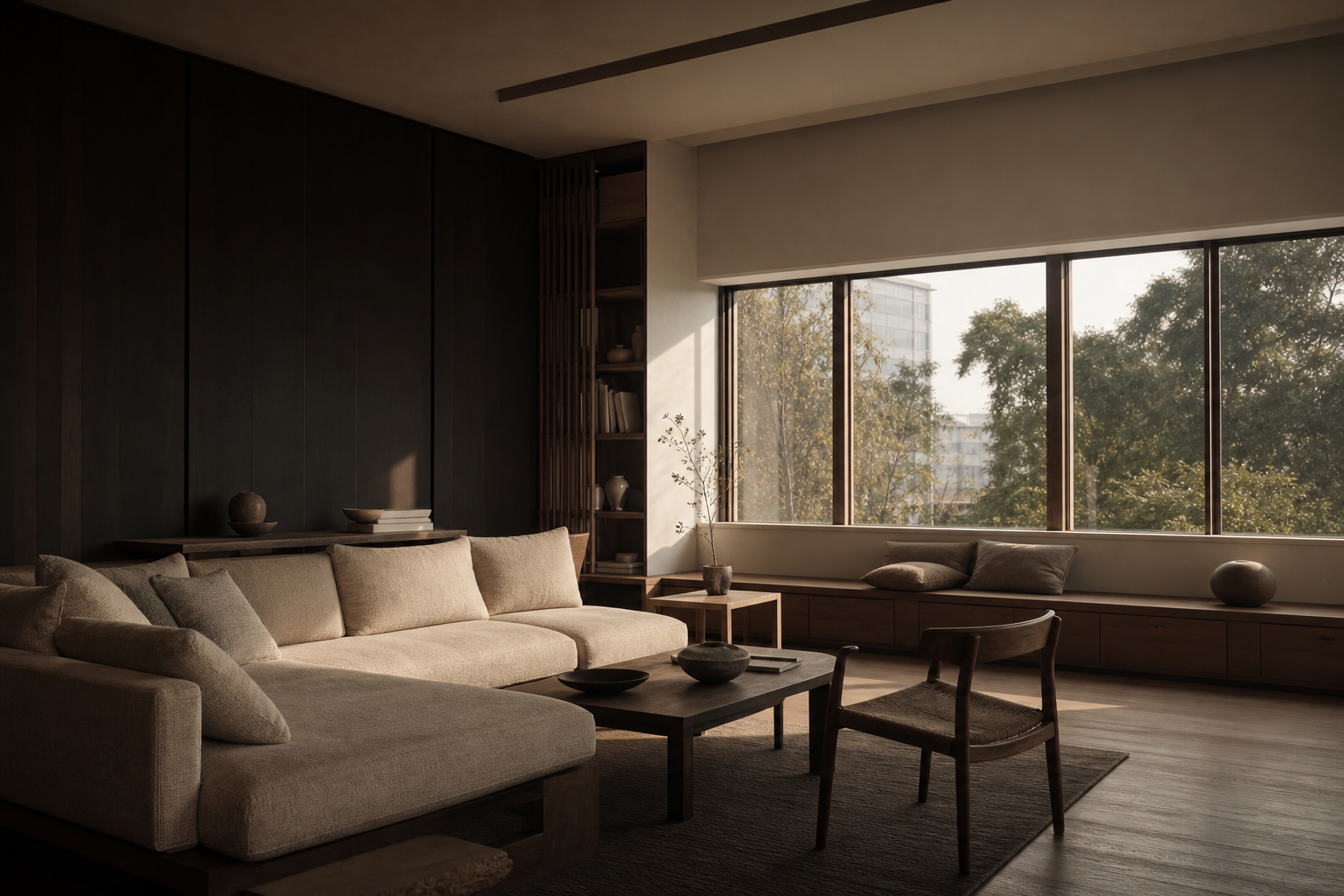
Good web design for interior designers treats each home as a short story, not a thumbnail. Lead with one strong image, let the visitor scroll through the spaces in the order they would walk them, and put a clear consultation prompt after every project. Custom layouts and well-judged scroll animation do this better than a portfolio template, because they control pacing, scale and sequence in a way a fixed grid cannot.
This guide is for Singapore interior designers and renovation firms. It covers what to put on the site, how to present projects, where animation helps and where it hurts, and what affects cost.
In this article
- In short
- What a visitor is really deciding
- Why portfolio templates fall short
- How to show interior projects online: a step by step method
- Where scroll animation helps
- Where animation hurts
- What to include beyond the portfolio
- Renovation company websites: a slightly different job
- Interior designer website examples worth studying
- Interior design website cost
- Make the site findable and compliant
- Our view
- FAQ
In short
- Show fewer projects in more depth. Three well-told homes beat thirty thumbnails.
- Use scroll to control pacing: one room, one idea, one moment at a time.
- Animation must serve the photography. If it slows the page or hides the work, remove it.
- End every project page with a clear next step, such as booking a consultation.
- Ask for a fixed, written quote, and check that you will own your domain, content and site.
What a visitor is really deciding
Someone looking for an interior designer in Singapore is rarely comparing prices first. They are asking whether you can make a home like theirs feel the way they want it to feel. A HDB flat, a condominium unit and a landed home each raise different questions, and your website has to answer them quickly.
Three things matter most:
- Taste: does the work look like something they want to live in?
- Fit: have you handled homes like theirs?
- Trust: is it easy to see how you work and what happens after they enquire?
A gallery of images answers the first and ignores the other two. That is the main weakness of most portfolio templates.
Why portfolio templates fall short
Templates are built to suit every designer, so they suit none in particular. The usual pattern is a grid of cropped images, a lightbox and a contact page. Several problems follow.
- Cropping removes the space. A square thumbnail of a living room cannot show how the room flows into the dining area.
- Every site looks alike. If a visitor has opened five designer sites, a template makes yours the sixth version of the same page.
- There is no sequence. Grids show everything at once, so the visitor has no reason to look closely at anything.
- Enquiry prompts are bolted on. A single contact link in the menu is easy to ignore.
A custom layout lets you decide how large each image appears, what sits beside it, and when the visitor is invited to act. At BrillianceTech, every site is designed and built from a blank page, with no templates or page builders, for exactly this reason.
How to show interior projects online: a step by step method
Step 1: Choose projects for the enquiries you want
Your portfolio is a filter. If you want more full-home renovations, show full-home renovations. Pick a small set that covers the property types you want to win, for example a compact flat, a larger condominium and one standout commission.
Step 2: Build each project as a case study
Give each project its own page with a simple structure:
- A hero image that shows the best view of the finished space.
- A short brief: the property type, the household, what they asked for.
- The problem and your solution, in two or three short paragraphs.
- Room by room images in walking order.
- Details that show craft: joinery, lighting, material close-ups.
- A closing prompt that links to a consultation form.
Step 3: Commission the right photography
Finished homes need photography that shows light, scale and finish. Ask your photographer for wide shots that establish the room, then closer shots for texture. Supply high resolution images, then let the site deliver compressed versions to each device.
Step 4: Let scroll set the pace
On a project page, scroll can act like a walkthrough. A hero image can settle as the page loads, a floor plan can sit beside the matching room, and a before and after can reveal as the visitor moves down. The visitor is led through the home instead of being handed a pile of pictures.
Step 5: Add a prompt where interest is highest
Place the consultation prompt at the end of each case study, not just in the header. Someone who has just scrolled through a finished kitchen is more ready to ask about theirs than someone on the homepage.
Where scroll animation helps
Used with restraint, animation makes a portfolio easier to read. These are the uses we think work best for interior work:
- Staged reveals: images and captions appear as the visitor reaches them, so each room gets attention.
- Scale changes: a detail image expands to fill the screen to show texture.
- Horizontal sequences: a row of rooms moves sideways as the visitor scrolls down, which suits a home that flows.
- Hover and cursor responses: a project title shifts, or an image preview follows the cursor over a list of projects.
You can see how different effects behave in the Brilliance Websites studio, which lists hero and gallery layouts such as the editorial bento hero and the rising gallery hero. They are useful for judging what feels right for your own work before a design begins.
Where animation hurts
An interior portfolio is image heavy and easy to slow down.
- Speed: heavy effects and large images can make a page slow. Google publishes Core Web Vitals guidance on how loading, responsiveness and layout stability are measured, and it is a sensible checklist to give any developer.
- Motion sensitivity: some people find movement uncomfortable. Sites should respect a visitor's reduced motion setting, as described in web accessibility guidance from the W3C.
- Hidden content: if the visitor must wait for an effect to finish before seeing a room, the effect is in the way.
- Small screens: test every effect on a phone first, since layouts that work on a large monitor often break down on a narrow one.
A simple rule: if you remove the animation and the page is less clear, keep it. If the page is just as clear, it was decoration.
What to include beyond the portfolio
Here is the set of pages we would plan for a Singapore firm.
| Page | Purpose | What to include |
|---|---|---|
| Homepage | First impression | One strong hero image, a short line on your style, two or three featured projects, a consultation prompt |
| Projects | Proof of taste and fit | Case studies grouped by property type |
| Services | Clarity | What you design, what you build, what is outsourced |
| Process | Trust | The steps from first meeting to handover |
| About | Credibility | Your design view, team, credentials |
| Contact | Conversion | A short form, WhatsApp link, area covered |
Our own process page sets out how a site build runs, which is a useful comparison when you write up your own client process.
Renovation company websites: a slightly different job
A renovation contractor and an interior designer overlap, but the emphasis differs. A designer sells vision. A renovation company also has to sell reliability. If you do both, show:
- Finished homes to prove the result.
- A clear explanation of who is responsible for what.
- The property types you handle, such as HDB, condominium and landed.
- A plain route to ask for a quote.
For consumer guidance on choosing a renovation firm, the Consumers Association of Singapore is a useful official starting point.
Interior designer website examples worth studying
When reviewing any example, ask:
- Does the first screen show a finished space or a stock graphic?
- Can you tell within ten seconds which property types the firm handles?
- Does a project page tell you anything beyond pictures?
- Is there a clear next step on every page?
- Does it load quickly on a phone?
The BrillianceTech portfolio shows past work, and the industries page shows the sectors we build for.
Interior design website cost
There is no honest single price, because cost depends on the number of pages, how much custom layout and animation you want, whether you need a content management system to add projects yourself, and how much photography and writing you supply.
What you can control is how the price is set. Look for:
- A fixed, written quote before any work begins.
- A design you can see before the build starts.
- Clear ownership: you should own your domain, content and site.
BrillianceTech has built over 300 projects since 2023. If you want search visibility on top of the site itself, Brilliance Growth is our SEO and AI search visibility service. The FAQ page covers common questions on scope and timing.
Make the site findable and compliant
A beautiful portfolio no one finds does little. Give each project page a clear title, a descriptive heading and text that says what the project is: the property type, the area and the style. Image heavy pages with no text are hard for search engines and AI assistants to understand.
If your enquiry form collects names, phone numbers or addresses, you are handling personal data. The Personal Data Protection Commission sets out the obligations for Singapore organisations, so state clearly why you collect the data and how it will be used.
Our view
A home is a sequence of spaces, and a website should present it that way. A grid of thumbnails is a filing cabinet. A custom, paced layout is a walkthrough.
Every site we make is designed and built from a blank page, with no templates, no page builders and no shortcuts, so that a Singapore interior firm looks like itself and not like a theme. Animation is a tool for that, used where it makes the work clearer and left out where it does not.
If you are weighing up a new site, you are welcome to start a conversation, or look at the full range of what we build first.
FAQ
What should an interior design portfolio website include?
A strong homepage, a small set of in depth project case studies, a services page, a process page, an about page and a simple contact route. Each case study should end with a consultation prompt.
How many projects should I show?
Show enough to cover the property types you want to win, then stop. A small set told well is more persuasive than a long list with no context.
Is scroll animation worth it for an interior designer?
Yes, if it controls pacing and makes the images easier to read, such as staged room reveals. No, if it slows the page or hides the work. Test it on a phone before approving it.
Can a renovation company use the same site structure?
Yes, with more emphasis on reliability: how work is organised, which property types you handle and how to request a quote.
How much does an interior design website cost?
It depends on page count, custom layouts, animation and whether you need a content management system. Ask for a fixed, written quote before any work begins.
Do I need to own my website?
Yes. Make sure you own your domain, content and site, so you are free to move or update it later.