9 min read
Restaurant Website Design in Singapore: What Gets Diners to Book
Restaurant website design in Singapore works when it shows the food well, makes the menu easy to read, and puts booking one tap away on a phone.
David
Content Specialist
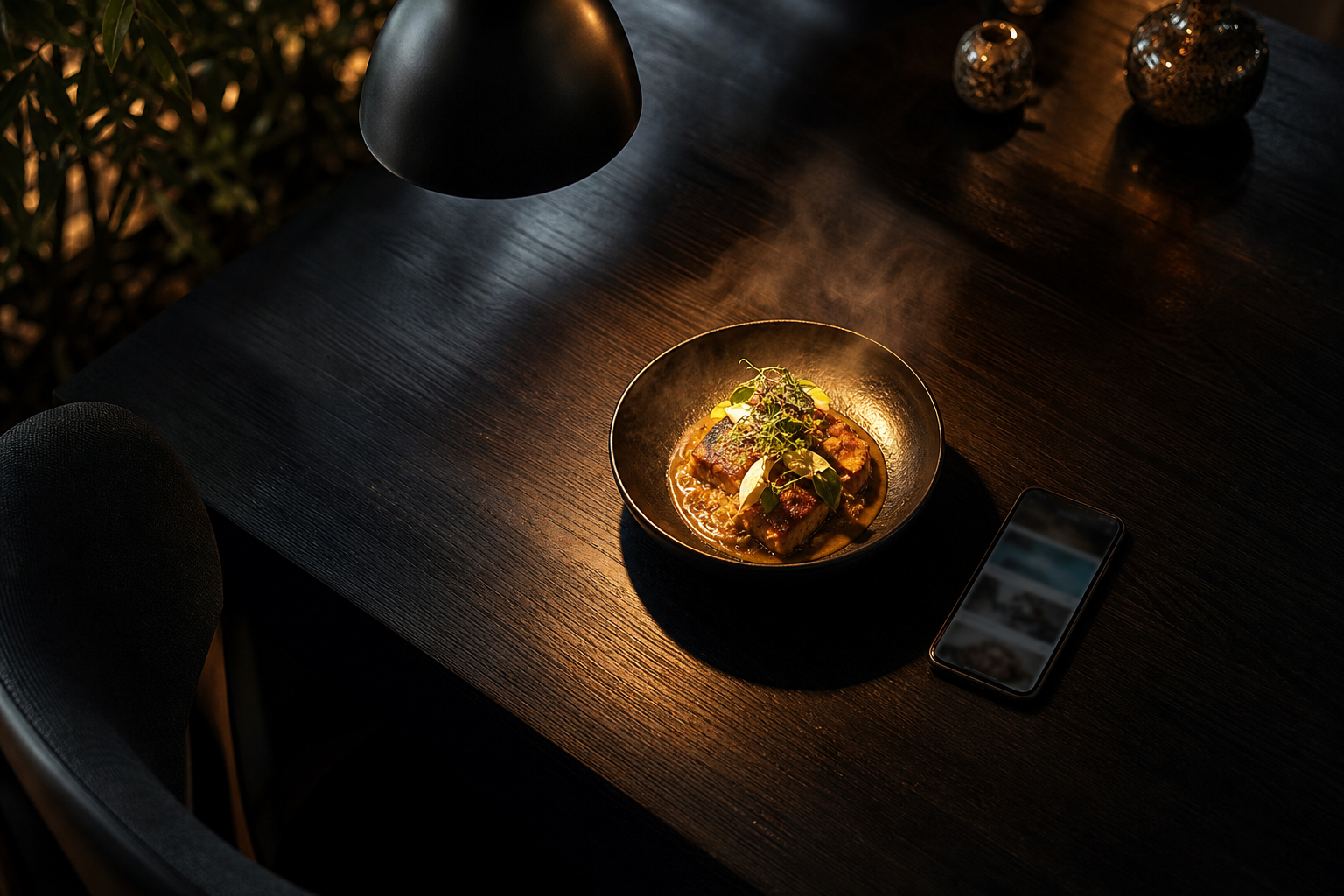
Restaurant website design in Singapore works when three things come together: food photography that makes people hungry, a menu that reads easily on a phone, and a reservation or enquiry button that is always within reach. Animation, search optimisation and everything else support those three. This guide covers what to include, how to make a site feel premium, and what drives the cost.
In this article
- In short
- What does a restaurant website need to get bookings?
- Why do templates make good restaurants look ordinary?
- How can animation make a menu and food photography feel premium?
- Should a restaurant website take reservations directly?
- What about direct ordering versus delivery apps?
- How do café websites differ from restaurant websites?
- How do you make a restaurant site easy to find on Google and AI search?
- How much does a restaurant website cost in Singapore?
- How does the process work?
- Our view
- FAQ
In short
- Lead with one strong dish image, your cuisine, your area and a booking button.
- Put the menu in real text on the page, not only in a PDF, so it loads fast, reads well on a phone and can be found on search.
- Keep reservations, direct ordering and enquiries one tap away on every page, using the booking route your team actually monitors.
- Use animation to serve the food, and test it on a mid range phone.
- Cost depends on scope, not on the label "restaurant website". Ask for a fixed, written quote before any work begins.
What does a restaurant website need to get bookings?
Start from what a hungry person on a phone wants to know. They want to see the food, check the menu and prices, find the location and hours, and book. If any of those is slow to find, many will go back to the search results or open a delivery app.
These are the must haves for a restaurant or café site in Singapore:
- A clear first screen. Cuisine, neighbourhood, one hero image and one primary button (Reserve, Order or Enquire).
- A readable menu. Text on the page, grouped sensibly, with dietary notes and halal or vegetarian information where relevant.
- Real photography. Your own dishes and your own room. Generic stock images tell a diner nothing.
- Location, hours and contact details. Nearest MRT station, a map link, parking notes and public holiday hours.
- A booking or enquiry route. A reservation widget, WhatsApp link, phone number or form.
- Fast loading on mobile. Many first visits happen on a phone, often on a pavement.
- Private dining and events. A short page with a form for group enquiries, which are often your highest value bookings.
- Consistent details. Your name, address and hours should match across your site and your Google Business Profile.
This list is the baseline. Most competing restaurant sites will have it, so on its own it will not make yours memorable. Design does that.
Why do templates make good restaurants look ordinary?
A template is built to suit thousands of venues, so its layout, spacing, type and image treatment are tuned for none in particular. A fine dining room and a hawker style stall can end up with the same hero banner and the same three column menu.
Diners may not be able to explain why, but they sense it. For a venue that charges for atmosphere, craft and detail, the website is the first table setting.
Every BrillianceTech website is designed and built from a blank page, with no templates, no page builders and no shortcuts. Structure, type, colour and motion are chosen around your food, your room and your customers. See the selected work to judge the results yourself.
How can animation make a menu and food photography feel premium?
Motion is a design tool, like lighting in a dining room. In my opinion, three uses earn their place on a restaurant site.
Scroll animation that paces the story
A page that reveals dishes as the visitor scrolls can feel like courses arriving at the table. One image settles into view, a short line of copy follows, then the next. The pace controls how the visitor reads, which is hard to do on a static page.
Hover and touch effects on the menu
On a long menu, small interactions help. A dish image can appear when someone hovers over or taps a menu item, and categories can expand without a page reload. The menu stays in real text, so prices are never hidden.
Galleries that show texture
Food is about texture, steam, gloss and colour. Carousels, galleries and layered image layouts let photography fill the screen instead of sitting in a small box. The studio library shows the kinds of animated sections BrillianceTech builds. Effects such as eye tracking and hand gesture control are also possible, though they suit a brand with a strong concept rather than every venue.
Where restraint matters
Two rules keep animation honest. Nothing should block the booking button or the menu, and heavy effects must not slow the site on a mid range phone. If an effect fails either test, remove it.
Should a restaurant website take reservations directly?
If you take bookings, yes. A diner who has already decided to come should not have to leave your page and search for you elsewhere.
| Booking route | Best for | Watch out for |
|---|---|---|
| Embedded reservation widget | Venues with a table management system | It must look right on mobile and match your design |
| WhatsApp click to chat | Small cafés and owner run restaurants | Someone must reply quickly, including on weekends |
| Enquiry form | Private dining, events, set menus | State a clear reply time on the form |
| Tap to call phone number | Walk in heavy venues and older clientele | Hours must be accurate |
Whichever you choose, repeat it in the header, after the menu and at the foot of the page. Tell visitors what happens next, for example that you will confirm by message.
Data protection when you collect details
If your form collects names, numbers or email addresses, you are handling personal data. The Personal Data Protection Commission administers Singapore's Personal Data Protection Act, which sets out how organisations may collect, use and disclose personal data. Its advisory guidelines on key concepts explain obligations such as consent and purpose in more detail. In practice, keep your consent wording plain and say what you will use the details for.
What about direct ordering versus delivery apps?
A website is the one channel you control. You choose how the menu looks, what you say about the food and how customers reach you, and you keep the customer relationship rather than renting it.
That does not mean dropping delivery apps, which bring discovery. A sensible split is to let your website handle people who already know you, through direct ordering, pre orders, catering requests and bookings, while apps handle people who are still browsing. Check each platform's current commission terms before comparing costs, as they change.
Your site can also present the whole menu better than an app can. Longer descriptions, chef notes, seasonal specials and set menus all suit your own page.
How do café websites differ from restaurant websites?
The basics are the same, but the emphasis shifts.
- Cafés rely on mood, location and repeat visits. Lead with atmosphere, the coffee and food, opening hours and an easy way to find you. Events, merchandise and beans for sale may matter more than bookings.
- Restaurants often need stronger menu presentation, tasting menu detail, reservations and private dining.
- Multi outlet F&B groups need a clear outlet picker, per outlet hours and menus, and one brand voice across all of them.
How do you make a restaurant site easy to find on Google and AI search?
A beautiful site that no one finds does not book tables. A few steps help most:
- Keep your Google Business Profile complete. Hours, photos, menu link and booking link should match your site.
- Use real text for the menu and key facts. Search engines and AI assistants read text more reliably than images or PDFs.
- Add structured data. Google's local business structured data documentation explains how to mark up details such as address, opening hours and menu link so search can understand them. Google's introduction to structured data covers the format and testing.
- Write a page per outlet or offer. A dedicated private dining page can answer a specific search better than a general home page.
- Keep pages fast. Compress images, size them properly and load heavy effects only when needed.
If you want help beyond the build, BrillianceTech offers Brilliance Growth, its SEO and AI search visibility service.
How much does a restaurant website cost in Singapore?
The price depends on scope, so a single figure would mislead. These are the factors that move it:
- Custom design or template. A blank page design takes more design time than adapting a template.
- Number of pages. A single outlet café is smaller than a multi outlet group.
- Animation and interaction. Scroll effects, galleries and custom interactions add design and build work.
- Booking and ordering integration. Connecting a reservation system or ordering tool adds scope.
- Content management. If your team will update menus often, a content management system needs to be set up.
- Photography and copy. Professional food photography is often a separate cost.
- Ongoing support and SEO. These sit after launch.
Grants and support
Singapore has schemes for business digital adoption, and eligibility and funding terms change. Enterprise Singapore lists its Enterprise Development Grant for local companies, and IMDA describes its SMEs Go Digital programme. Check the current terms on those pages before you plan around any grant.
Whichever studio you choose, ask for a written quote that lists exactly what is included. At BrillianceTech, you receive a fixed, written quote before any work begins.
How does the process work?
BrillianceTech has been building websites since 2023 and has delivered over 300 projects. A restaurant project runs like this:
- Conversation. You tell us about the venue, the diners you want and how bookings reach you today.
- Fixed, written quote. You get it before any work begins.
- Design first. You see the design before it is built.
- Build. The pages, animation, menu and booking routes are built.
- Handover. You receive the finished site.
The full breakdown is on the process page.
Our view
A restaurant sells a feeling before it sells a dish. Your website is where that feeling starts, and a template cannot give your food its own stage.
That is why every site we make is designed and built from a blank page, to help Singapore businesses stand out and convert more visitors into enquiries.
If you are weighing up options, a no pressure, no commitment conversation is on offer. Get in touch about your venue, or read the FAQ first.
FAQ
What must a restaurant website have?
A clear first screen with a booking button, a readable text menu, your own photography, location and hours, a booking or enquiry route, and fast mobile loading.
Can a restaurant website take reservations?
Yes. You can embed a reservation widget, use a WhatsApp link, or add an enquiry form for private dining. If you collect personal data, follow the PDPC's guidance on the PDPA.
How much does a restaurant website cost in Singapore?
It depends on design approach, number of pages, animation, integrations and content management. Ask for a fixed, written quote that lists the scope, and check current terms for any Enterprise Singapore grant.
Do I still need delivery apps if I have a website?
Often yes, for discovery. A website works best for people who already know you, handling direct orders, catering and bookings, while you keep control of the brand.
Does structured data help a restaurant site?
It gives search engines clear details such as address and opening hours. See Google's local business structured data guide for the markup it documents.
Do animated pages slow a restaurant website down?
They can if they are overdone. Test effects on mobile and never let them block the menu or booking button.